Have you ever wondered how your young child seems to learn without any formal instruction? One day, they suddenly begin speaking full sentences with your exact inflection, walking with steady confidence, or mimicking your daily routines with astonishing precision.
Dr. Maria Montessori described this extraordinary early power of learning as the Absorbent Mind—a unique mental state present only during the first six years of life.
At Seeds of Life Montessori Academy, our living practice environment is intentionally designed to support this sacred developmental window. Guided by our founder, María Eva Chaffin, our team integrates Montessori philosophy with modern research in neurodiversity, executive function, and self-regulation. Understanding how the absorbent mind works helps us prepare spaces—both at school and at home—where every child can construct themselves with joy, independence, and deep focus.
The Absorbent Mind vs. The Adult Mind: Camera vs. Painter
The way a young child learns is fundamentally different from how adults process information. Adults learn through conscious, effortful study—we memorize, repeat, and practice. Children, on the other hand, absorb impressions directly into their very being.
Montessori offered a vivid comparison:
- The Adult Mind is like a Painter: An adult selectively chooses what to focus on, filtering details and interpreting the scene based on past experience.
- The Absorbent Mind is like a Camera: A child’s mind takes in the entire scene instantly and indiscriminately. Every detail—beautiful or chaotic, peaceful or tense—is snapped and permanently etched into their developing neural pathways.
"Adults admire their environment, they can remember it and think about it; but the child absorbs it. The things he sees are not just remembered; they form part of his soul."
— Dr. Maria Montessori, The Absorbent Mind
The Two Phases of Early Development
During these first six years, the absorbent mind operates in two distinct, sequential phases:
1. The Unconscious Absorbent Mind (Birth to 3 Years)
In our Nido (Toddler) environment, children take in environmental impressions effortlessly. Without formal lessons, they soak up language, emotional tone, movement patterns, and physical boundaries. During this phase, nature acts as their "inner teacher". Our role as adults is simply to provide safe, unrestricted spaces for movement and rich sensory exploration.
2. The Conscious Absorbent Mind (3 to 6 Years)
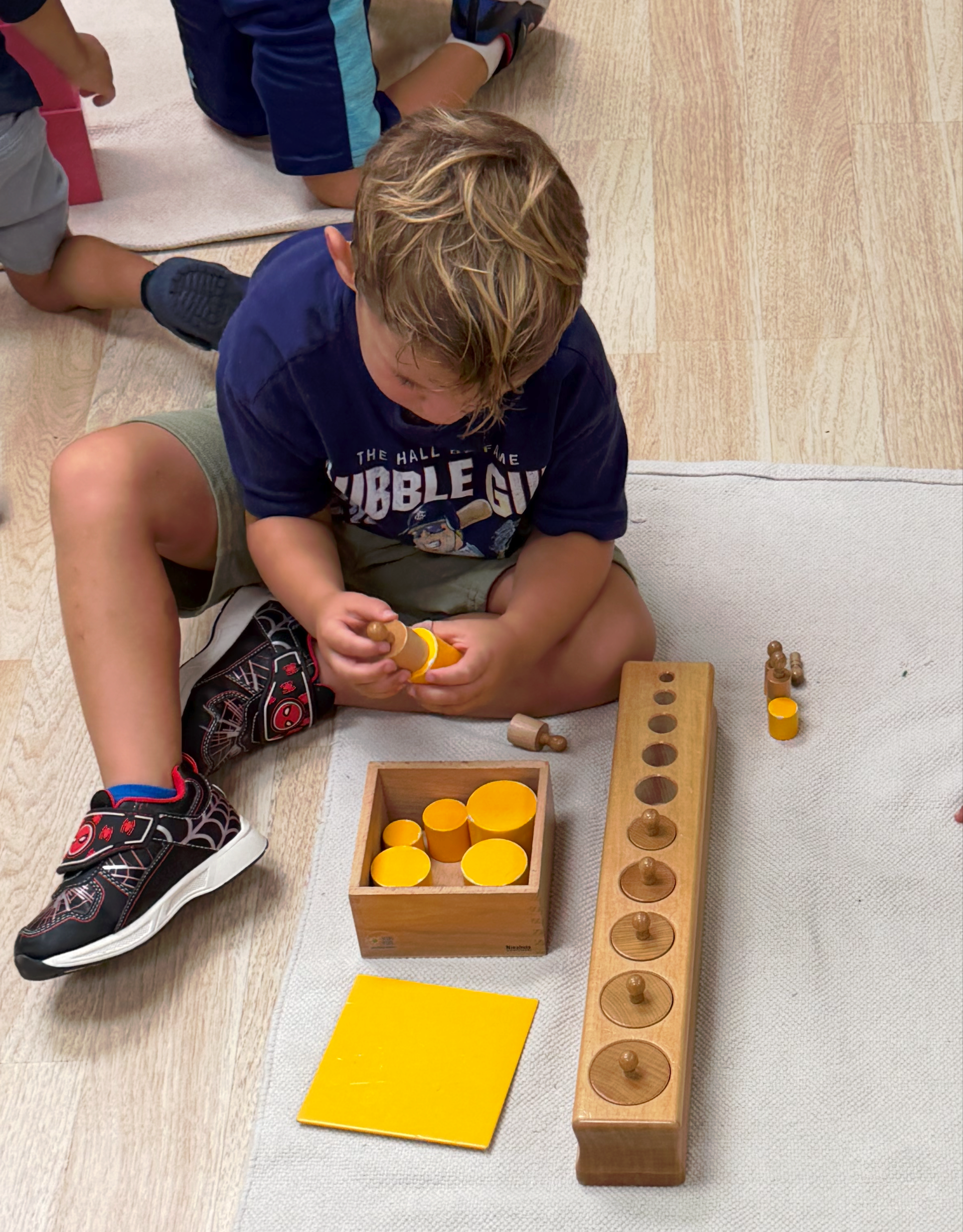
In our Casa environments, children transition into organizing and classifying everything they unconsciously absorbed during their first three years. This is when a profound desire for order and purposeful work emerges. Through hands-on sensorial materials, practical life tasks, and uninterrupted work cycles, children build executive function, strengthen their concentration, and refine their fine and gross motor coordination.
Supporting the Absorbent Mind at Home
Because young children absorb their surroundings without a filter, the quality of their environment deeply impacts their inner peace and confidence. Here is how you can support your child's absorbent mind within your daily home rhythm:
- Cultivate External Order: Keep your living spaces organized, calm, and predictable. Low shelves and clear places for belongings help children build internal mental clarity.
- Offer "Real Work" Opportunities: Invite your child into everyday tasks like slicing soft fruit, folding washcloths, or watering plants. These practical life activities refine movement, extend attention spans, and build a strong sense of family contribution.
- Use Clear, Rich Language: Speak clearly and with a varied vocabulary. Remember that the words, tone, and emotional cadence you use today become your child's inner voice tomorrow.
- Mind the Emotional Atmosphere: Children take in our emotional tone just as readily as spoken words. Modeling calm self-regulation, patience, and respectful communication creates a safe psychological environment for learning.
Planting Seeds for a Lifetime of Focus
The Absorbent Mind is a temporary developmental gift. By honoring this phase with an intentionally prepared environment, we help children build essential executive function, independence, and a lifelong love of discovery.
Ready to see how our prepared environments support the absorbent mind in real time? We invite you to reach out to Seeds of Life Montessori Academy to learn more about our neuroinclusive model and observe our classrooms in action.