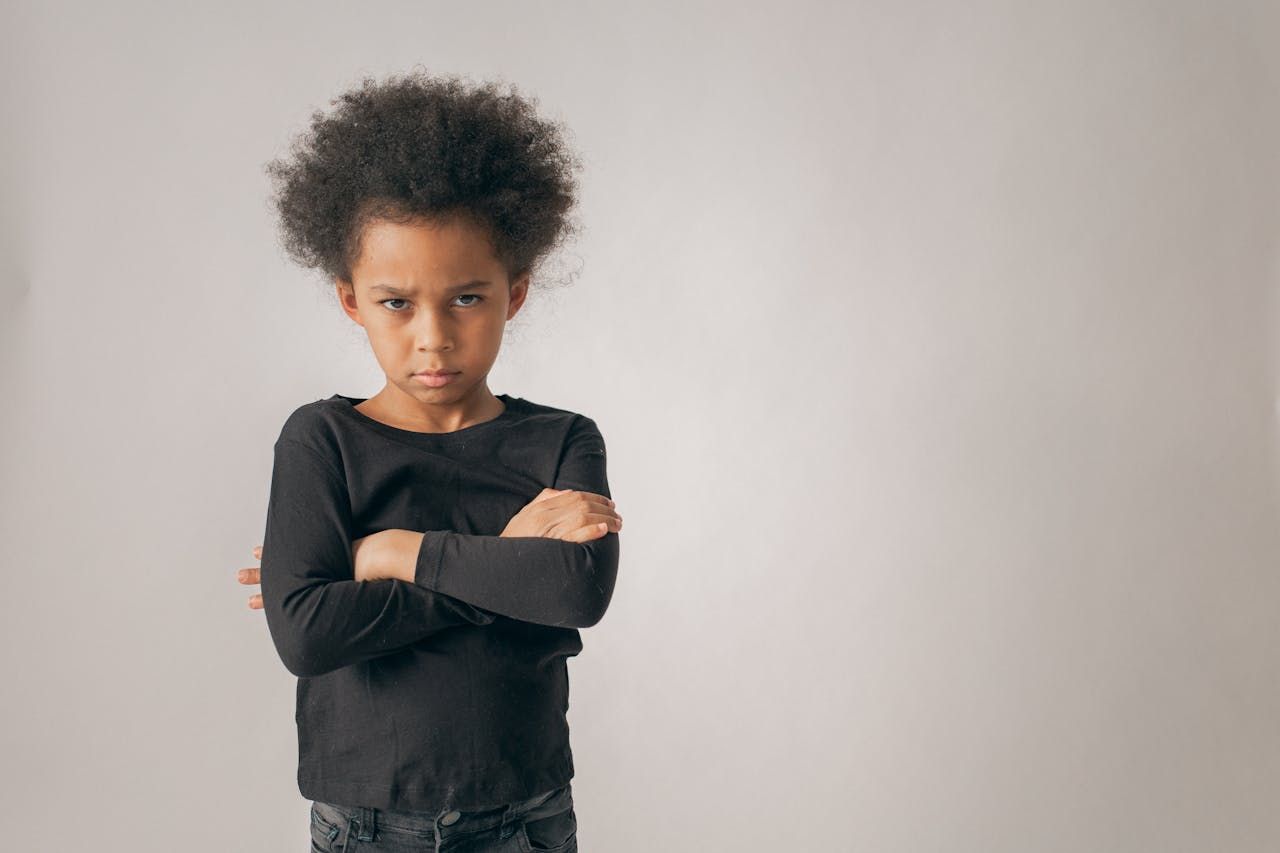
What To Do With Disrespect

Few experiences challenge us adults more than feeling disrespected by our children. When a child talks back, shouts hurtful words, or responds with anger, it can strike at the heart of our sense of connection. Yet when we examine these moments more closely, they often reveal something deeper: a child struggling with big feelings and an adult unsure how to respond without escalating the situation.


Montessori education reminds us to look beneath behavior and see the developing child who is still learning emotional regulation, communication, and perspective-taking. Disrespectful words are often less about defiance and more about overwhelm.


When Children Say, “I Hate You”


Children sometimes resort to strong words when they realize they cannot change an adult’s decision. A request to go to a friend’s house or a desire for more independence can quickly turn into an emotional outburst when the answer is “not today.” For many children, especially younger ones, emotions tend to be extreme. They feel that they love a parent when things go their way and hate them when they feel thwarted.


As adults, however, we hear the word hate with its full weight and meaning. Merriam-Webster defines hate as “extreme dislike or antipathy: loathing,” and adults often reserve it for moments of deep hurt. Children do not. They use the word as a blunt tool to express frustration, disappointment, or a sense of powerlessness.


Rather than reacting to the word itself, Montessori-informed parenting encourages us to respond to the feelings beneath the word. A calm acknowledgment, such as “You’re really angry right now,” helps our children feel seen and understood. The goal is not to accept disrespectful language but to model emotional literacy. By naming the emotion instead of punishing the outburst, we can show children that big feelings can be handled with clarity and calm.


When adults overreact to the word hate, children may learn that it is an effective way to provoke a response. When adults remain grounded, children begin to understand that emotions can be expressed without resorting to hurtful language.


When Children Talk Back


Those angry last words, muttered insults, or attempts to reopen a closed discussion (a.k.a. ‘back talk’) are often viewed as the pinnacle of disrespect. For adults, it can feel like a direct challenge to authority. For children, however, back talk usually signals that the situation has reached a boiling point. They are overwhelmed, upset by a limit, or trying to have the final say when they feel powerless.


Some children also learn that persistent pushback can wear down adults’ resolve. If arguing leads to a changed decision even once, children will understandably try again.


One effective approach is simply not to engage. Ignoring back talk while still holding firm to the original limit removes the reward of an emotional reaction. It communicates, “The boundary is set, and I won’t be pulled into a power struggle.”


This is not permissiveness. It is clarity. When adults refuse to escalate, children gradually stop using back talk as a tool. Over time, they experience a powerful model of self-control: an adult who remains peaceful, firm, and grounded even in tense moments.


Allowing a child to have the last word can feel counterintuitive. Yet it often reduces conflict, shortens arguments, and preserves the adult-child connection. It teaches children that relationships do not depend on “winning” but on mutual respect and emotional resilience.


Choosing Connection Over Control


Disrespectful language can trigger a strong emotional response in us as adults. It can feel personal, even when it isn’t meant that way. In heated moments, it can help to pause and ask a simple question:


Is the goal to be right, or is the goal to remain close?


Children need loving boundaries, but they also need adults who can maintain connection even when emotions run high. Responding calmly to disrespect does not mean accepting the behavior. It means addressing the root cause rather than reacting to the symptom.


Montessori parenting encourages adults to guide children with both firmness and grace. We focus on teaching children not only what behavior is expected, but also how to manage the feelings that fuel behavior. When adults model emotional steadiness, children learn by example. And as they grow, relationships deepen rather than fracture.


Over time, the decision to prioritize connection builds trust, strengthens communication, and helps children develop the internal tools needed for respectful interactions. 


Visit us here in Sarasota, FL,  to see how we help families invest in nurturing long-term relationships!

July 27, 2026
The Metal Insets are one of Montessori's most misunderstood materials. They look simple. They are doing something extraordinary.
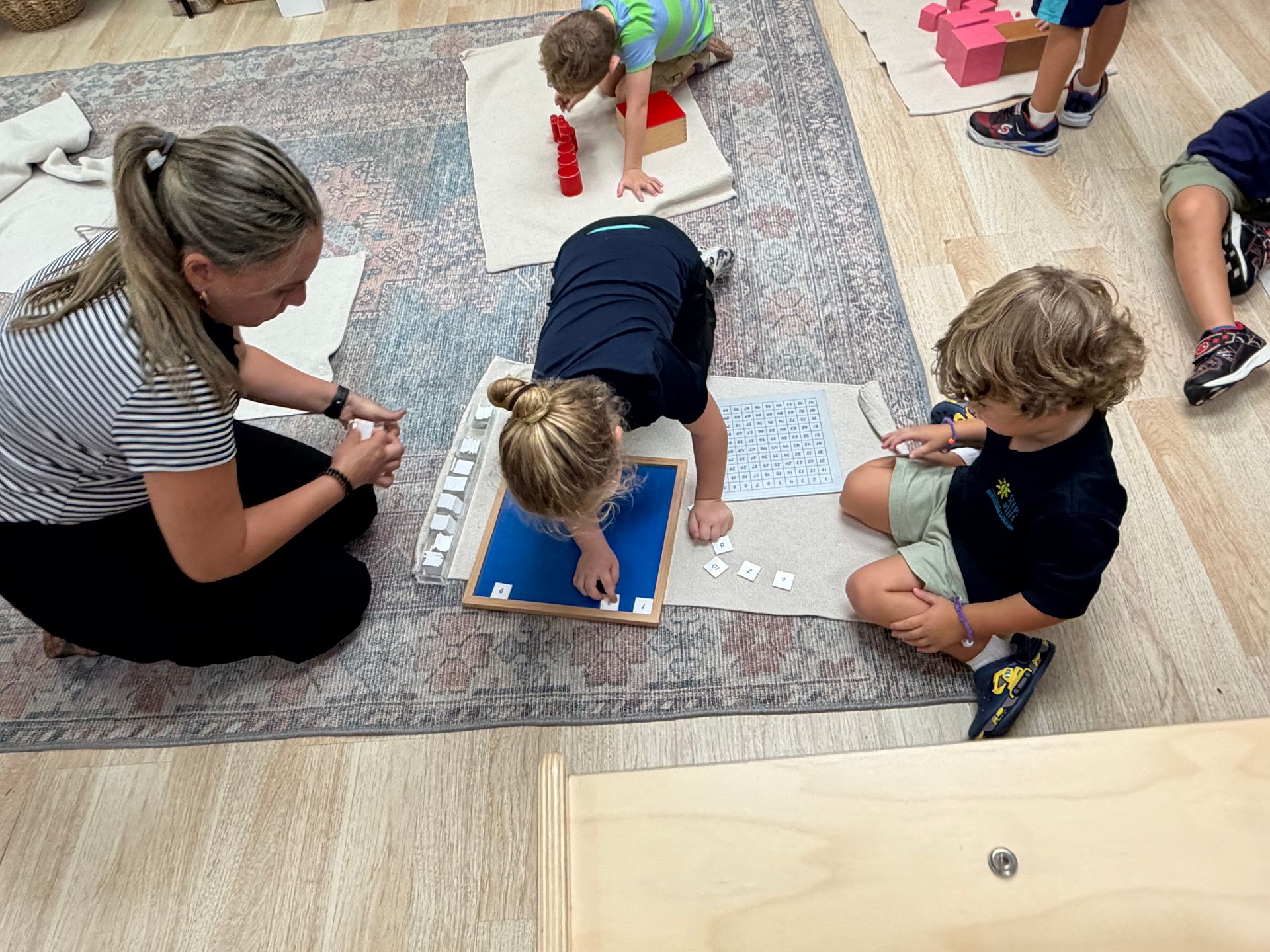
Two children kneel on a rug, reaching into a wooden puzzle board together.
By Jeff Chaffin July 21, 2026
In an era where many families seek personalized, child-centered education, homeschooling has seen significant growth. Parents value the flexibility, deep family bonds, individualized pacing, freedom from screens, and nurturing of intrinsic motivation that homeschooling can provide. These aspirations lie at our core. At Seeds of Life Montessori Academy (SOL Montessori) in Sarasota, Florida, our authentic Montessori program—rooted in over 150 years of proven methodology—mirrors many of homeschooling's core values while addressing common challenges through professional expertise, community, and resources that most home environments find difficult to replicate consistently. Shared Foundations: Child-Led Learning and Independence Both homeschooling and Montessori education prioritize the child as an active participant in, their own development rather than a passive recipient of instruction. Homeschool families often follow the child's interests, allowing deep dives into topics at their own pace. Similarly, Montessori classrooms embody Dr. Maria Montessori's principle of "follow the child." Teachers prepare an environment rich with hands-on materials that invite exploration, then step back to observe and guide as needed. At SOL Montessori, this looks like children choosing work that captivates them—whether mastering practical life skills like food preparation (echoing homeschool kitchen involvement) or exploring geography with geo specific physical artifacts that ignite imagination. Our bilingual (English-Spanish) immersive environment further supports cultural awareness and language acquisition in a natural, family-like way. Practical life activities are a hallmark in both approaches. AMS (American Montessori Society) resources highlight how parents can incorporate Montessori-style self-care and household tasks at home, such as folding laundry or meal prep with real tools. Since SOL Academy is a verified AMS school, committed to high-fidelity Montessori practices in our classrooms, these activities are daily norms, scaled to the child's abilities, fostering confidence and responsibility without external rewards or punishments—nurturing the intrinsic motivation many homeschool parents cherish. The Power of Relationships and Community Homeschooling often strengthens family bonds through dedicated time together. Montessori extends this by creating a "family-like" multi-age community. Our 3-year age cycles (e.g., ages 3- 6 in Primary, 1st-3rd grade in Junior Elementary, etc.) allow children to form deep, consistent relationships with teachers and peers—older children mentor younger ones, reinforcing learning through teaching, while younger ones gain inspiration. This mirrors sibling dynamics at home while scaling those benefits to a broader, diverse peer group. Children build essential social skills, empathy, and collaboration in ways that a single-family setting often finds difficult to sustain consistently amid the varying rhythms, transitions, and scheduling commitments. SOL Montessori maintains an average 7:1 teacher-to-child ratio , enabling highly individualized attention. Our dedicated teachers and supportive administrative structure allow for truly personalized instruction tailored to each child—support that even the most committed homeschooling parents, while balancing multiple children, household responsibilities, or work demands, can find challenging to sustain at the same level of consistency and depth. Expertise and Individualized Support. One of homeschooling's strengths is tailored support, but it can be challenging for parents without specialized training to address diverse sibling needs consistently, especially in areas like neurodiversity. SOL Montessori's teachers hold AMS-aligned credentials involving extensive coursework, practicum, and ongoing professional development—significantly surpassing standard requirements and placing them among the most highly prepared educators in early and elementary education. Our founder, Maria Eva Chaffin, brings deep expertise as an inclusion specialist, with advanced degrees, doctoral research on how to support educators and teams to achieve the best possible individual outcomes for every child, and thousands of hours working child development specialist and educators around the world. Maria regularly shares her experience and resources via @montessori_behavior on Instagram. Through our sister organization, Montessori Behavior, Maria and the SOL team provide training and consulting to teachers and administrators around the world. Maria is now a sought-after international consultant and speaker and SOL Montessori Academy serves as a model school for other chools and academies globally that are seeking to leverage the success of SOL within their own organizations. Teacher preparation—including professionally, mentally, and emotionally—plays one of the most critical roles in early childhood development and education. With this extensive in-house expertise and experience, SOL teachers create a truly unique environment where every child feels secure, loved, and free to explore their passions with confidence. This foundation of co-regulation, nervous system awareness (drawing on Maria’s extensive training and research on the polyvagal theory), and deep understanding of child development, empowers the team to enable every child to thrive authentically. Montessori's research-backed methods align with modern neurology, emphasizing hands-on materials over screens. We prioritize real-world interaction, nature integration, and minimalism —reducing overstimulation while maximizing focus and joy. Addressing Homeschooling Challenges  While homeschooling offers flexibility, families often cite isolation, limited socialization opportunities, inconsistent access to specialized materials, parental burnout, gaps in advanced subjects or extracurriculars, and the extensive travel and car time required to shuttle between various activities and functions as hurdles. Many also experience the constant pressure to manage or negotiate screen time—whether as a reward, distraction during transitions, or to fill scheduling gaps—which can conflict with desires for screen-free, hands-on learning. SOL Montessori complements or serves as a robust alternative: Proven Curriculum & Materials: 150+ years of refinement with self-correcting, sequential materials that "teach" independently while teachers facilitate. Community & Socialization: Multi-age classrooms provide natural peer modeling and friendship-building. Sustainability for Families: Professional educators handle daily instruction, freeing parents to be emotionally available for their children while drastically increasing the quality of family interaction , advocacy, or work. No Screens Emphasis: Deep, tactile learning that builds concentration and creativity. Bilingual & Inclusive Excellence: Tailored support in a diverse, welcoming setting serving Sarasota-area families. Parents partnering with us often report the best of both worlds: Montessori at school reinforcing homeschool values at home, with easy extensions via AMS parent resources and SOL parent educational events. Why Choose SOL Montessori for Your Homeschool-Minded Family? If you're drawn to homeschooling for its personalization, independence, and whole-child focus, Seeds of Life Montessori Academy offers a proven, professional embodiment of those ideals— plus the infrastructure, expertise, and community that amplify outcomes. Our approach ensures mevery child, including those with unique needs, receives the support to flourish. We invite you to schedule a tour and see the calm, purposeful environment where children lead with joy and purpose. Discover how our model school can partner with your family’s vision.