At Seeds of Life Montessori Academy, we often talk about the importance of independence, concentration, and coordination. But before a child can hold a pencil with control, balance a water pitcher, or move peacefully through their prepared environment, they must first develop a foundational neurological map: Body Schema.
As a living practice environment, our team of guides and specialists observes how infants, toddlers, and young children build this essential self-awareness through continuous sensory-motor exploration. Here is a look at what body schema is, why it matters so deeply for your child’s lifelong development, and how you can support it at home.
What is Body Schema?
Body schema is the internal map we carry of our physical selves. It is the unconscious awareness of where our body parts are, how they relate to one another, and where our physical boundaries end and the external environment begins.
From the moment a newborn reaches for their own toes or gazes at their tiny fingers, they are receiving critical feedback from their nervous system. This ongoing dialogue between movement and touch teaches them: "This is me, and that is the world around me."
Why Is Body Schema So Essential?
When a child develops a clear, healthy body schema, it leads directly to the unity of mind and body—a key principle in Montessori education.
- Refined Motor Coordination: To execute purposeful, deliberate movements—like pouring liquid, climbing stairs, or carrying a tray—the brain must have an accurate map of where the limbs are in space.
- Self-Regulation & Nervous System Balance: Body schema provides physical grounding. When children feel secure in their physical bodies, their emotional regulation and focus improve.
- Positive Self-Image: Experiencing physical capability builds a child's psychological self-awareness. Understanding their physical self forms the foundation of a confident, secure self-image.
How Body Schema Unfolds Across Stages
Body schema develops through spontaneous movement, starting even before birth!
- Toddler & Primary (Casa): Body schema continues to refine as children test their strength, carry heavy objects, and refine fine motor precision.
- Adolescence: Teenagers experience another massive surge in growth. Their body schema must recalibrate once again, which is why older children thrive with large motor movement, outdoor work, and physical expression.
Simple Ways to Support Body Schema at Home
You don’t need special equipment to help your child develop strong body awareness. Everyday home routines offer rich opportunities for purposeful movement!
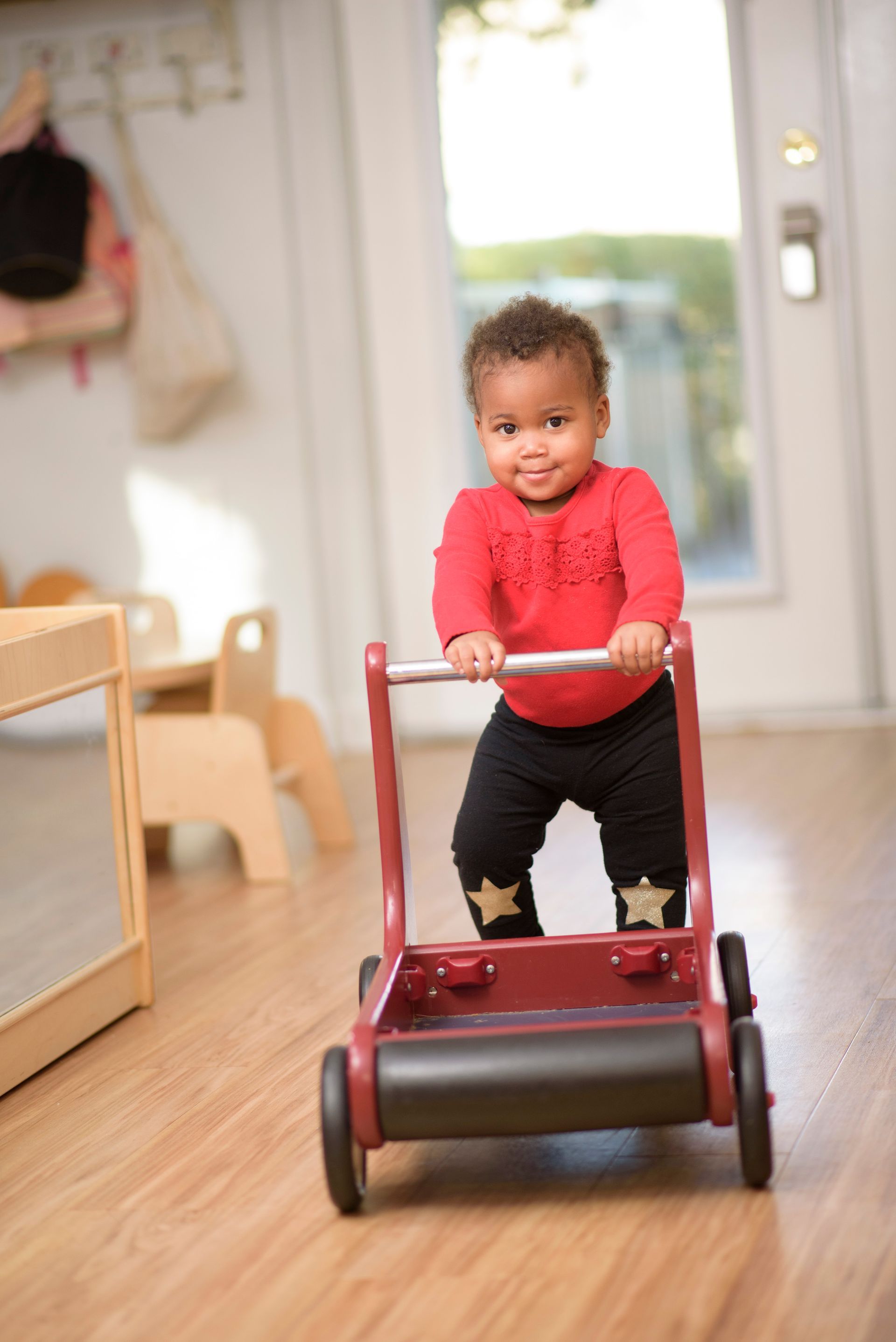
- Encourage "Maximum Effort": Give your child chances to use their full physical strength. Let toddlers push laundry baskets or carry heavy grocery bags, and encourage older children to run, climb, and complete physical obstacle courses.
- Use Rich, Anatomical Language: During bath time or dressing routines, playfully name specific body parts: "Let's push your heel down into your shoe," or "I’m pulling your sweater right over your elbow."
- Play Movement Games: Classic games like Simon Says, mirror imitation, or simple balancing games help children focus inward and refine their bodily control.
What to Watch Out For
To let a child’s body map develop naturally, we want to remove unnecessary physical barriers:
- Limit "Containers": Whenever possible, give infants free movement on a blanket on the floor rather than keeping them restricted in car seats, bouncers, or infant swings.
- Allow Barefoot and Unrestricted Exploration: Avoid mitten-covered hands or restrictive clothing that limits tactile feedback during crucial early months.
- Mindful Pacifier Use: Prolonged pacifier use can blur a child's sensory boundary, making the pacifier feel like a physical extension of their mouth.
The Real-World Result: A Mind-Body Integration
When we honor a child's need for sensory-motor exploration, they gain far more than physical strength—they build profound self-trust. The confidence that grows from feeling in control of one's own body lays the groundwork for executive function, academic focus, and a positive outlook on life.
💡 Experience Our Prepared Environments: Want to see how our prepared spaces support maximum effort, self-regulation, and natural movement across all age levels? Reach out to Seeds of Life Montessori Academy to
schedule a tour and see our living practice environment in action!