Nurturing the Transition: Preparing Your Family for the Rhythm of the New School Year

It is that beautiful time of the year again at Seeds of Life. Over the course of the summer, even with our very best intentions, our daily rhythms tend to gently dissolve to make room for slow mornings, outdoor adventures, and necessary relaxation. This fluid time is wonderful for a child’s nervous system, allowing space for deep rest and unstructured exploration.


The start of our new school year is just around the corner, however. Right now is the perfect, sweet window to thoughtfully consider how we can support our children—and ourselves—as we transition back into the predictable, comforting rhythms of the school routine.


Whether your child is entering the Nido environment for the first time, continuing their journey in the Casa, or stepping into the deep social work of Elementary, a gentle refresher can help set everyone up for success. Here are a few supportive, Montessori-aligned ways to ease back into the school year with grace and intention.


Sleep: Anchoring the Internal Clock


A child’s sleep schedule is directly linked to their capacity for deep concentration, emotional regulation, and joyful independence throughout the school day. When looking at sleep, we want to focus on three elements: duration, timing, and the soothing quality of the environment.


To help protect their developing nervous systems, the American Academy of Pediatrics recommends the following total sleep hours within a 24-hour period (including rest time and naps):


  • 4 months - 1 year: 12 to 16 hours
  • 1 - 2 years: 11 to 14 hours
  • 3 - 5 years: 10 to 13 hours
  • 6 - 12 years: 9 to 12 hours
  • 13 - 18 years: 8 to 10 hours


Bringing Bedtime Forward: If your child’s summer bedtime is currently far from where it needs to be for school mornings, we encourage you to take the transition slowly. Shift bedtime up by just 15 minutes every couple of days. This gradual shift protects their internal clock from a sudden shock.


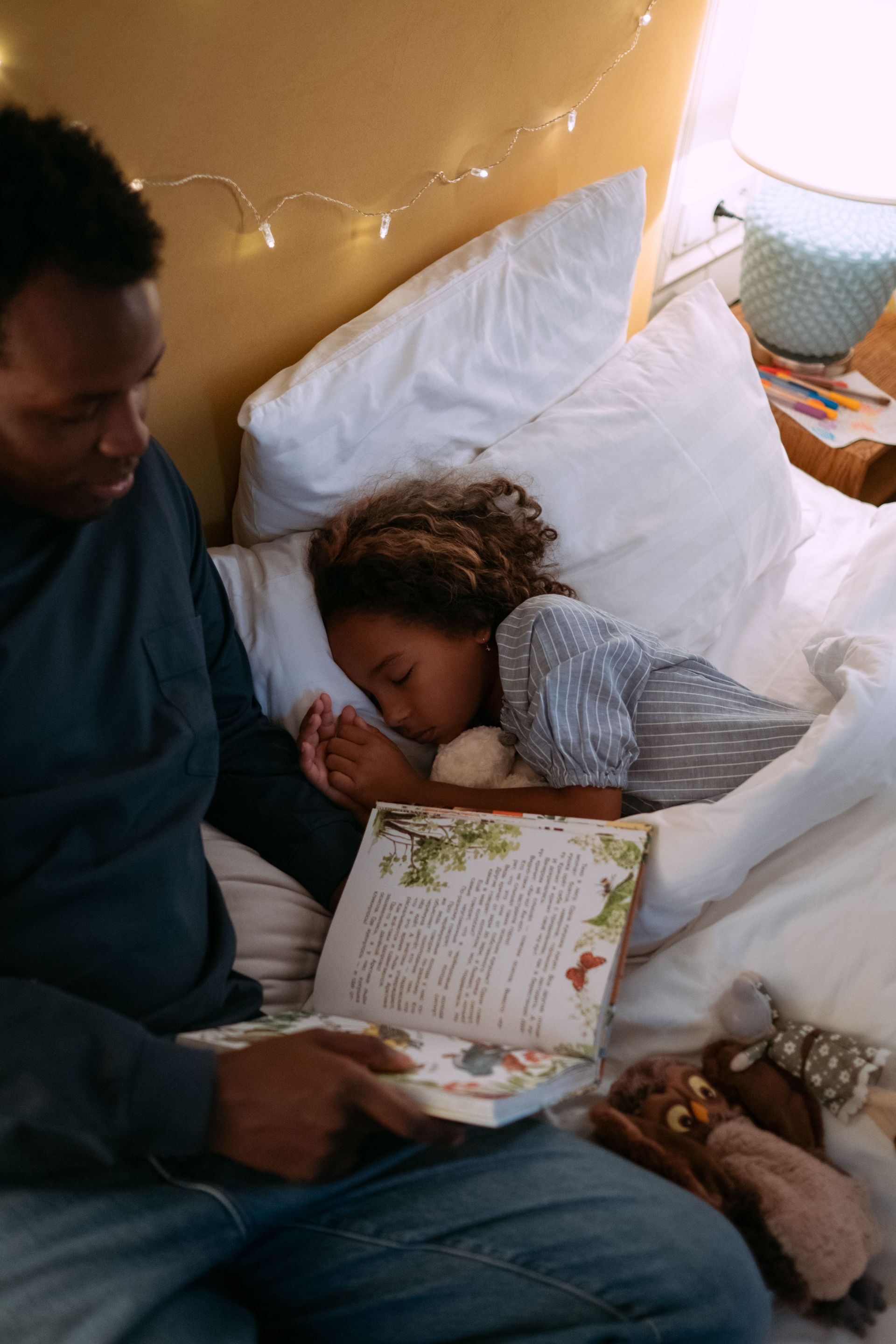
The Prepared Sleep Environment: Quality sleep relies on a calming environment. A cool, dark room with minimal distractions supports deep rest. Establishing a predictable evening ritual—such as a warm bath, sharing a story in a cozy corner, or dimming the lights early—signals to the child’s body that it is safe to unwind and drift off to dreamland.


Rhythms & Routines: Fostering Independence at Home


In a Montessori environment, we look at the "rhythm of the day" rather than a rigid schedule. When children can predict what comes next, they feel safe, secure, and fully equipped to confidently navigate their world.


As we prepare for the morning routine, consider how you can arrange your home environment to invite your child’s natural desire for independence:


  • Predictable Morning Milestones: What time does your family need to step out the door to arrive comfortably and unhurried at Seeds of Life? Count backward to ensure your morning has a peaceful, unhurried pace.
  • The Prepared Entryway: Set up a low hook for their backpack and a specific basket for their shoes. Knowing exactly where their things belong empowers them to take charge of their own preparation.
  • Evening Collaboration: Alleviate the morning rush by preparing the night before. Invite your child to choose their clothes or help pack their water bottle ahead of time. This shared process builds confidence and coordination.


Emotions: Observing and Validating Big Feelings


It is completely natural for children—and adolescents—to experience a wide wave of emotions as the first day of school approaches. Excitement, apprehension, or a little anxiety about being apart from you are all valid responses to change.


Because we hold a neuroinclusive space at Seeds of Life, we know that emotional tension often shows up in a child's behavior before they can put it into words. If you notice signs of restlessness, extra clinginess, or big emotional releases, we invite you to use a supportive approach: Observe, Empathize, and Validate.


  • Observe: Notice the shift without immediate judgment. “I notice your body is moving very quickly, and your hands are tight.”
  • Empathize: Offer a gentle mirror to their inner world. “Starting a new school year can feel very big, and it’s okay to feel a little nervous about saying goodbye in the morning.”
  • Validate: Allow the feeling to exist without trying to instantly "fix" it. Let them know that their feelings are safe with you and that experiencing a mix of excitement and worry is totally normal.


A Note for Our Parents: You might experience your own big feelings right now, too! Whether you are feeling the tenderness of watching them grow up so quickly, or navigating the logistical shift of drop-offs, give yourself grace. Modeling self-compassion and taking deep, steady breaths is the most beautiful way to show your child how to navigate life's transitions.


Expectations: Holding Space for the Journey


Even with the most beautiful plans and the best of intentions, life with children is beautifully unpredictable. The first couple of weeks of school are a time of observation, exploration, and calibration for everyone.


Some mornings may feel incredibly smooth, while others might feel a little bumpy as we all find our collective groove. Know that María Eva, our wonderful guides, and our entire staff are right here to support your family every step of the way.


Be kind to yourselves this week, enjoy these final slow summer evenings, and know that we cannot wait to welcome your children back into our beautiful learning community!


July 27, 2026
The Metal Insets are one of Montessori's most misunderstood materials. They look simple. They are doing something extraordinary.
Two children kneel on a rug, reaching into a wooden puzzle board together.
By Jeff Chaffin July 21, 2026
In an era where many families seek personalized, child-centered education, homeschooling has seen significant growth. Parents value the flexibility, deep family bonds, individualized pacing, freedom from screens, and nurturing of intrinsic motivation that homeschooling can provide. These aspirations lie at our core. At Seeds of Life Montessori Academy (SOL Montessori) in Sarasota, Florida, our authentic Montessori program—rooted in over 150 years of proven methodology—mirrors many of homeschooling's core values while addressing common challenges through professional expertise, community, and resources that most home environments find difficult to replicate consistently. Shared Foundations: Child-Led Learning and Independence Both homeschooling and Montessori education prioritize the child as an active participant in, their own development rather than a passive recipient of instruction. Homeschool families often follow the child's interests, allowing deep dives into topics at their own pace. Similarly, Montessori classrooms embody Dr. Maria Montessori's principle of "follow the child." Teachers prepare an environment rich with hands-on materials that invite exploration, then step back to observe and guide as needed. At SOL Montessori, this looks like children choosing work that captivates them—whether mastering practical life skills like food preparation (echoing homeschool kitchen involvement) or exploring geography with geo specific physical artifacts that ignite imagination. Our bilingual (English-Spanish) immersive environment further supports cultural awareness and language acquisition in a natural, family-like way. Practical life activities are a hallmark in both approaches. AMS (American Montessori Society) resources highlight how parents can incorporate Montessori-style self-care and household tasks at home, such as folding laundry or meal prep with real tools. Since SOL Academy is a verified AMS school, committed to high-fidelity Montessori practices in our classrooms, these activities are daily norms, scaled to the child's abilities, fostering confidence and responsibility without external rewards or punishments—nurturing the intrinsic motivation many homeschool parents cherish. The Power of Relationships and Community Homeschooling often strengthens family bonds through dedicated time together. Montessori extends this by creating a "family-like" multi-age community. Our 3-year age cycles (e.g., ages 3- 6 in Primary, 1st-3rd grade in Junior Elementary, etc.) allow children to form deep, consistent relationships with teachers and peers—older children mentor younger ones, reinforcing learning through teaching, while younger ones gain inspiration. This mirrors sibling dynamics at home while scaling those benefits to a broader, diverse peer group. Children build essential social skills, empathy, and collaboration in ways that a single-family setting often finds difficult to sustain consistently amid the varying rhythms, transitions, and scheduling commitments. SOL Montessori maintains an average 7:1 teacher-to-child ratio , enabling highly individualized attention. Our dedicated teachers and supportive administrative structure allow for truly personalized instruction tailored to each child—support that even the most committed homeschooling parents, while balancing multiple children, household responsibilities, or work demands, can find challenging to sustain at the same level of consistency and depth. Expertise and Individualized Support. One of homeschooling's strengths is tailored support, but it can be challenging for parents without specialized training to address diverse sibling needs consistently, especially in areas like neurodiversity. SOL Montessori's teachers hold AMS-aligned credentials involving extensive coursework, practicum, and ongoing professional development—significantly surpassing standard requirements and placing them among the most highly prepared educators in early and elementary education. Our founder, Maria Eva Chaffin, brings deep expertise as an inclusion specialist, with advanced degrees, doctoral research on how to support educators and teams to achieve the best possible individual outcomes for every child, and thousands of hours working child development specialist and educators around the world. Maria regularly shares her experience and resources via @montessori_behavior on Instagram. Through our sister organization, Montessori Behavior, Maria and the SOL team provide training and consulting to teachers and administrators around the world. Maria is now a sought-after international consultant and speaker and SOL Montessori Academy serves as a model school for other chools and academies globally that are seeking to leverage the success of SOL within their own organizations. Teacher preparation—including professionally, mentally, and emotionally—plays one of the most critical roles in early childhood development and education. With this extensive in-house expertise and experience, SOL teachers create a truly unique environment where every child feels secure, loved, and free to explore their passions with confidence. This foundation of co-regulation, nervous system awareness (drawing on Maria’s extensive training and research on the polyvagal theory), and deep understanding of child development, empowers the team to enable every child to thrive authentically. Montessori's research-backed methods align with modern neurology, emphasizing hands-on materials over screens. We prioritize real-world interaction, nature integration, and minimalism —reducing overstimulation while maximizing focus and joy. Addressing Homeschooling Challenges  While homeschooling offers flexibility, families often cite isolation, limited socialization opportunities, inconsistent access to specialized materials, parental burnout, gaps in advanced subjects or extracurriculars, and the extensive travel and car time required to shuttle between various activities and functions as hurdles. Many also experience the constant pressure to manage or negotiate screen time—whether as a reward, distraction during transitions, or to fill scheduling gaps—which can conflict with desires for screen-free, hands-on learning. SOL Montessori complements or serves as a robust alternative: Proven Curriculum & Materials: 150+ years of refinement with self-correcting, sequential materials that "teach" independently while teachers facilitate. Community & Socialization: Multi-age classrooms provide natural peer modeling and friendship-building. Sustainability for Families: Professional educators handle daily instruction, freeing parents to be emotionally available for their children while drastically increasing the quality of family interaction , advocacy, or work. No Screens Emphasis: Deep, tactile learning that builds concentration and creativity. Bilingual & Inclusive Excellence: Tailored support in a diverse, welcoming setting serving Sarasota-area families. Parents partnering with us often report the best of both worlds: Montessori at school reinforcing homeschool values at home, with easy extensions via AMS parent resources and SOL parent educational events. Why Choose SOL Montessori for Your Homeschool-Minded Family? If you're drawn to homeschooling for its personalization, independence, and whole-child focus, Seeds of Life Montessori Academy offers a proven, professional embodiment of those ideals— plus the infrastructure, expertise, and community that amplify outcomes. Our approach ensures mevery child, including those with unique needs, receives the support to flourish. We invite you to schedule a tour and see the calm, purposeful environment where children lead with joy and purpose. Discover how our model school can partner with your family’s vision.