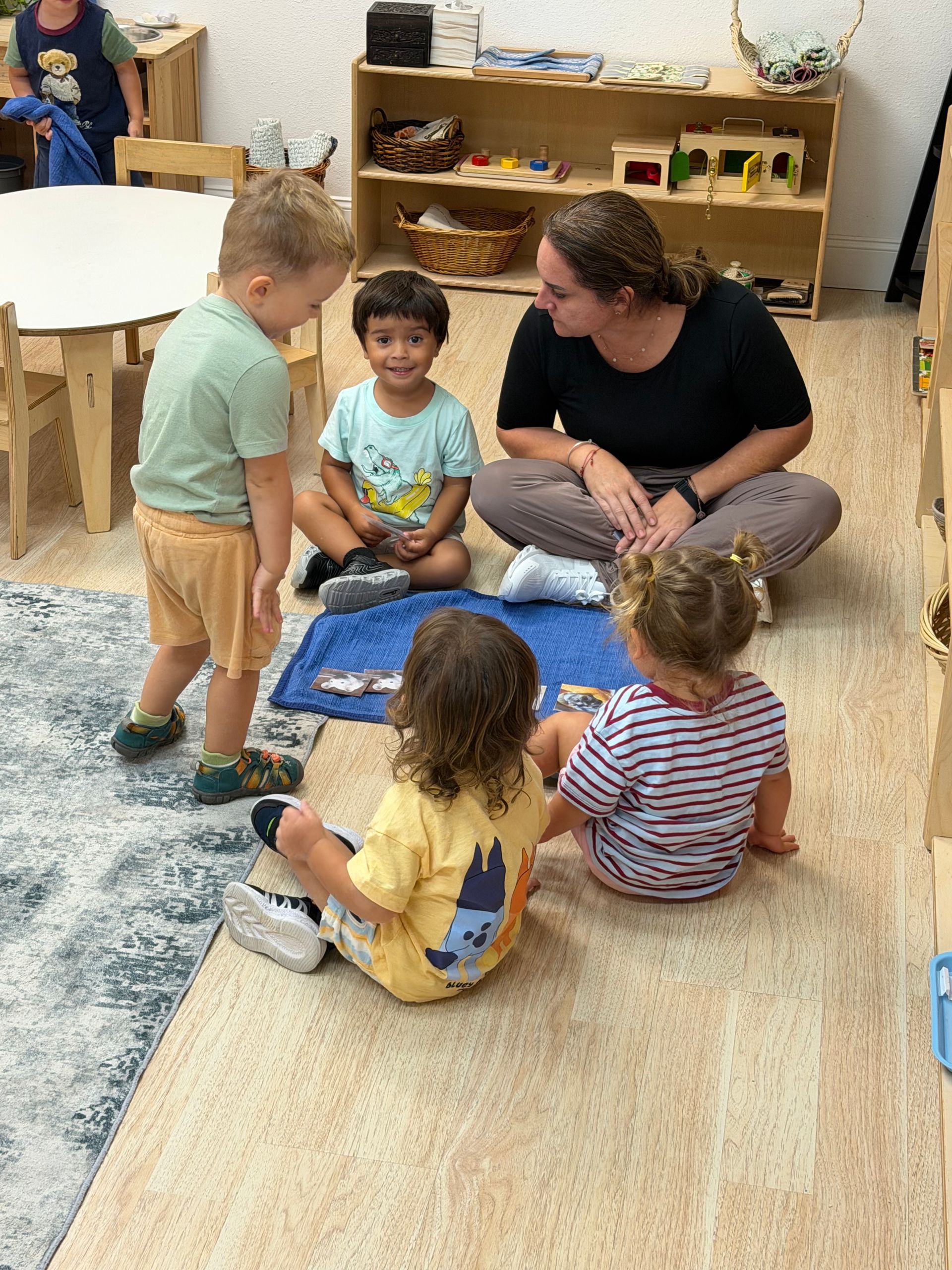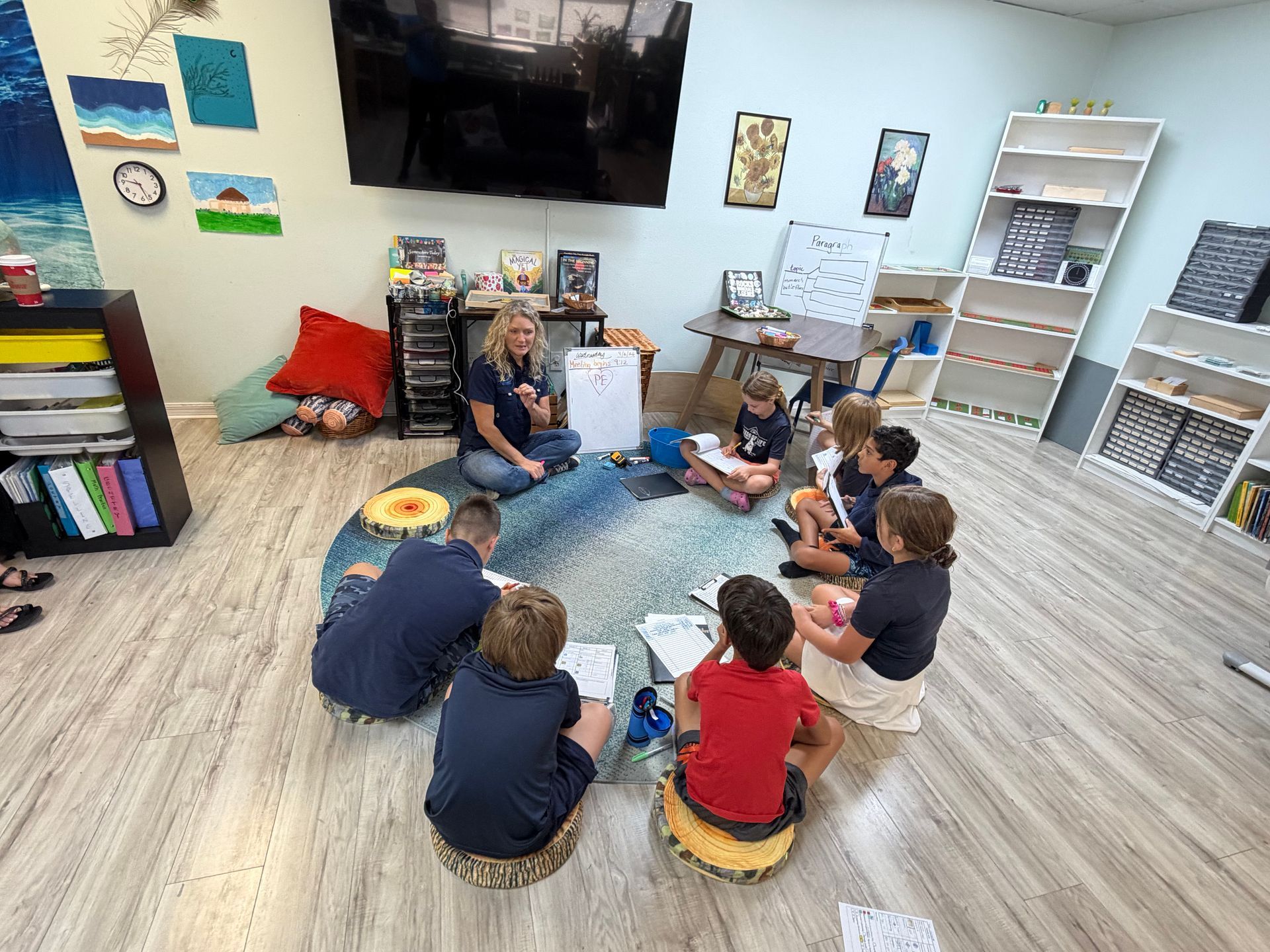
A few weeks ago, I watched something happen in a classroom that I can’t stop thinking about. It wasn’t dramatic. There wasn’t a big incident. No one was throwing materials or crying or running out of the room. It was one of those small moments that most adults don’t notice, but that tells you everything if you’re paying attention. A child walked into the room and paused. Not because he didn’t know what to do. Not because he didn’t want to work. He paused because his body was scanning. His eyes moved across the shelves, across the tables, across the adults, across the children. And then he did something that I’ve seen so many times: he didn’t choose a work. He didn’t join a friend. He didn’t ask for help. He moved toward the edge of the room and stayed there. Quiet. Observing. Protecting himself.
And in that moment, I thought, this is what belonging looks like when it’s missing. It’s not always loud. It’s not always disruptive. Sometimes it’s silent. Sometimes it’s invisible. Sometimes it looks like a child who is “fine.” But the body tells the truth. The nervous system tells the truth. When we don’t feel that we belong, we don’t move forward. We don’t risk. We don’t try. We don’t engage. We wait. We watch. We protect.
Belonging is one of those words that gets used so often in education that it starts to sound like decoration. Something we put on posters, something we say at staff meetings, something we add to mission statements. But belonging is not a slogan. Belonging is not a “soft skill.”
Belonging is not something we add once we finish the academic work. Belonging is biology. Belonging is the nervous system’s way of saying, I am safe here. I am seen here. I am allowed to exist here. And without it, nothing else works—not behavior plans, not lessons, not
consequences, not even the most beautiful Montessori environment.
We are wired for connection. Human beings are not built to survive alone. We are born dependent. We regulate through relationship. We learn through relationship. We heal through relationship. And even as adults—especially as adults—we still need relationship. Bruce Perry
says it in a way that always lands deeply: “Relationships are the agents of change.” Not programs. Not strategies. Not lectures. Relationships. And when we talk about belonging, what we are really talking about is the experience of relationship. The experience of being included. The experience of being welcomed into the group without having to earn it through performance.
One of the most important things we need to understand as educators and as human beings is that safety is not a thought. It is a felt experience. We can say “You’re safe” all day long, but if the body doesn’t feel safe, it doesn’t matter. We can tell a child, “You’re okay,” but if their nervous system is still in protection mode, they will not be able to access learning, language, or even the calm we are trying to invite. This is why Peter Levine’s work matters so much. He teaches us that trauma is not only what happens to us; it is what happens inside us. It is what the body holds when it has not had the opportunity to complete a stress response and return to regulation. In
other words, what we carry is not always visible—but it shapes everything.
When we talk about belonging, we are talking about the moment the nervous system says, I can exhale here. And that exhale is everything. Because without it, the brain stays on alert. A brain on alert cannot learn. A brain on alert cannot collaborate. A brain on alert cannot connect. And a brain on alert will often communicate through behavior.
This is where Montessori becomes so relevant—because Montessori was never just about materials. Montessori was always about the inner life of the child. The psychological needs of the child. The development of the human being. And Montessori was also, always, about the adult. The prepared environment matters. The materials matter. The lessons matter. But the most important “material” in the room is still the adult. The adult’s tone. The adult’s assumptions. The adult’s nervous system. The adult’s ability to stay present.
And this is where we need to expand the conversation, because belonging is not only a child issue. Belonging is an adult issue too. In fact, I would argue that belonging is one of the greatest missing pieces in education right now. Teachers are overwhelmed. Leaders are overwhelmed. Teams are stretched thin. People are tired. People are carrying personal stress, family stress, cultural stress, financial stress, and the emotional weight of caring for children. And many adults are working in environments where they do not feel they belong either. Teachers feel judged. Teachers feel watched. Teachers feel criticized. Teachers feel like they are failing. And when adults don’t feel safe, they become rigid. They become controlling. They become reactive. They become less flexible. They lose curiosity. They start seeing behavior as disrespect instead of communication.
Not because they are bad adults. Because they are human adults.
This is the part that is often missing in conversations about inclusion and belonging. We talk about making the child feel included. We talk about community. We talk about creating a culture of belonging for children. But we forget that adults model belonging through their
nervous system. If I don’t feel like I belong, I will unconsciously create systems of exclusion. I might become the adult who corrects first. I might become the adult who labels quickly. I might become the adult who relies on consequences. I might become the adult who interprets everything as defiance. Because when my body feels unsafe, I will reach for control. And control is the opposite of belonging.
This is why “connection before correction” is not only a strategy for children. It is a practice for adults. It is a reminder that before we guide, we must connect. Before we correct, we must regulate. Before we teach, we must belong. Bruce Perry’s work reminds us that the brain
develops from the bottom up. Regulation first. Then connection. Then cognition. Many educators use the sequence he teaches: Regulate, Relate, Reason. And this is not a cute framework. It is neuroscience. If a child is dysregulated, they cannot relate. If they cannot relate,
they cannot reason. And I would add something important: if the adult is dysregulated, the adult cannot co-regulate. We cannot give what we do not have.
This is why belonging is the bridge. Belonging is what allows regulation to settle. Belonging is what allows the brain to shift from survival to learning. Belonging is what allows the child to trust the adult. And belonging is what allows the adult to stay human in the middle of a hard moment.
Inclusion is not a checklist. It is not a program. It is not a label. Inclusion is belonging in action. Inclusion is the daily message that says: you are not too much. You are not a problem. You are not a disruption. You are part of us. And I want to say something clearly, because it matters: belonging is not earned through compliance. Belonging is not a reward for good behavior. Belonging is the foundation that makes growth possible. When children feel they belong, they take risks. They try again. They accept feedback. They stretch. They trust. When they don’t feel they belong, they protect themselves. And protection can look like aggression, avoidance, shutdown, perfectionism, refusal, control, constant movement, or disconnection.
Not because they are bad. Because they are trying to survive.
Montessori understood that education was bigger than academics. She believed education was the path to peace, and that children must be taught early that they belong to the human family. She spoke about identity, culture, and unity—not as competing forces, but as something we hold together. Montessori reminded us that the child is not being prepared only for school. The child is being prepared for life, for community, for humanity. And when we teach children that people belong only if they look the same, act the same, learn the same, speak the same, or regulate the same, we are not educating for peace. We are educating for division.
Belonging means we teach children, explicitly and implicitly, that we belong together. Across religion. Across culture. Across language. Across neurotype. Across ability. Across temperament. This is not political. This is human. And it begins with the adults who are willing to do the inner work required to make that message real.
This is where I want to bring in my own story, because I don’t think we talk enough about what belonging feels like for the adult. As an immigrant and as a Latina, belonging has been a lifelong theme in my life. Belonging is not something I take for granted. It is something I have searched for, something I have built, and something I have protected. There is a particular kind of loneliness that comes with being in spaces where you are welcome, but not fully understood. Where you are included, but still feel like you have to translate yourself. Where you are respected, but still feel like you have to prove that you deserve to be there.
And I think many educators know that feeling, even if they are not immigrants. Many adults have spent their whole lives trying to belong. Trying to be accepted. Trying to be “enough.” Trying to be the right kind of teacher, the right kind of leader, the right kind of parent, the right kind of professional. Belonging is not just a childhood need. It is a lifelong need. And when we don’t address it in adults, we unintentionally pass that hunger down to children.
And I think many educators know that feeling, even if they are not immigrants. Many adults have spent their whole lives trying to belong. Trying to be accepted. Trying to be “enough.” Trying to be the right kind of teacher, the right kind of leader, the right kind of parent, the right kind of professional. Belonging is not just a childhood need. It is a lifelong need. And when we don’t address it in adults, we unintentionally pass that hunger down to children.
This is why the Prepared Adult matters so much. Not the prepared adult as a title. Not the prepared adult as a training certificate. The prepared adult as a person who is willing to look inward. To notice bias. To notice assumptions. To notice triggers. To notice rigidity. To notice fear. Because fear is what makes us exclude. And safety is what makes us include. The prepared adult is the adult who pauses and asks, what is happening in me right now? Because the child does not just learn from our lessons. The child learns from our nervous system.
Belonging is not built through perfection. It is built through consistency. It is built through repair. It is built through adults who are willing to say, “I’m here.” Adults who are willing to soften. Adults who are willing to reflect. Adults who are willing to change the environment instead of blaming the child. Adults who are willing to offer connection before correction, not because it’s trendy, but because it is the only way to build safety.
Belonging looks like the teacher who learns a child’s rhythms instead of punishing their differences. Belonging looks like the adult who says “I see you” before they say “stop.” Belonging looks like leadership that asks, “What do you need?” instead of only asking, “Why isn’t this working?” Belonging looks like a team that supports each other instead of criticizing. Belonging looks like safety. And safety is not softness. Safety is strength.
If you are reading this and thinking about your classroom, your school, your team, or even your own life, I want to offer a reflection that I return to again and again. Where do you feel that you belong? And where do you still feel that you are performing for acceptance? Because the places where we are still performing are the places where our nervous system is still searching for safety. And when adults live in that state, we unintentionally pass it down to children.