This is a subtitle for your new post
For children in the first three years of life, movement is not an “extra.” It is how they build their bodies, organize their minds, and come to understand themselves in relationship to the world. In Montessori environments, a movement area offers freedom, safety, and the presence of the adult.
Whether in a Montessori classroom or at home, the way we prepare a movement area communicates a powerful message to our children: Your body is capable. You are trusted. You belong here.
Supporting the Youngest Movers
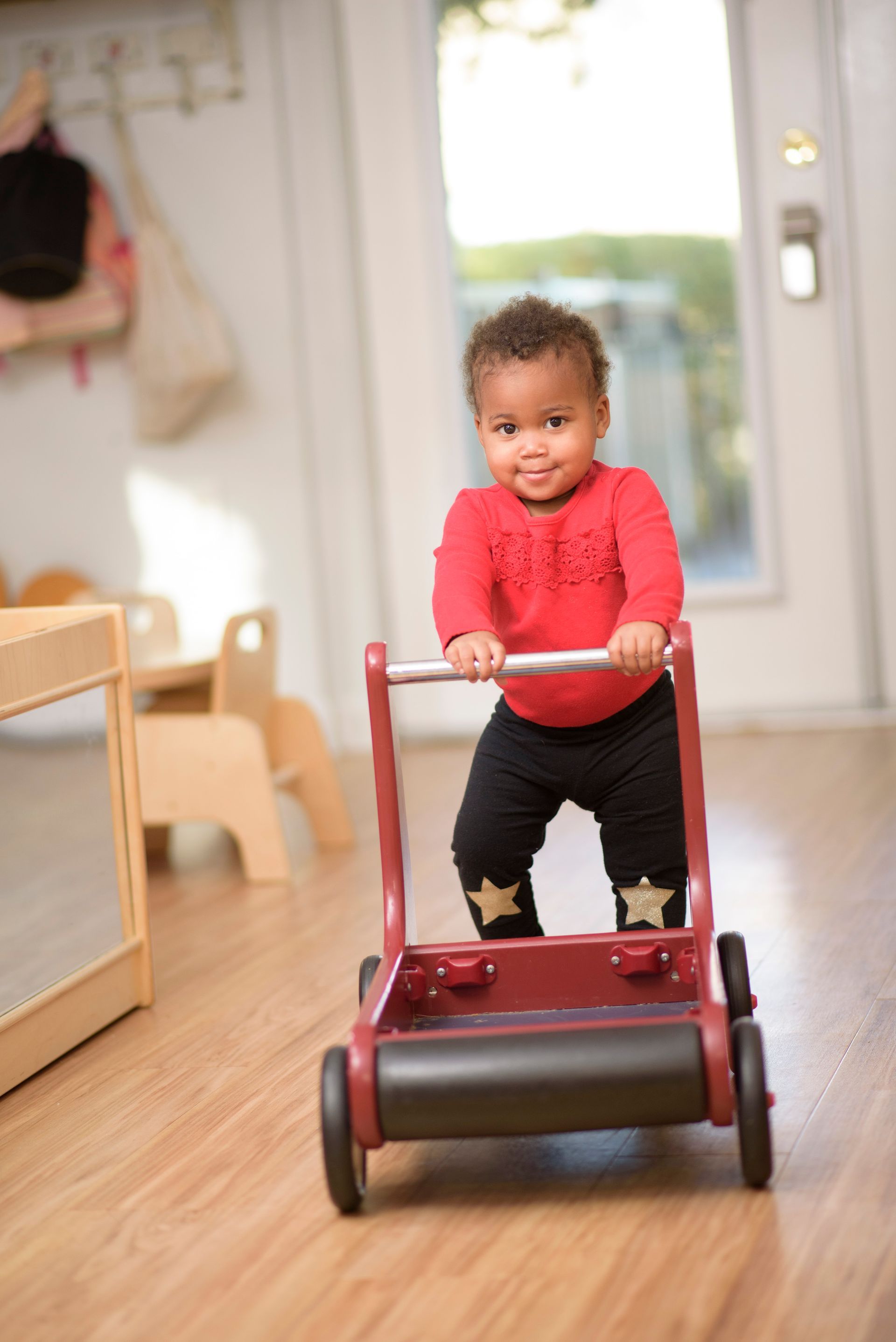
From about two months through the early walking stage, our little ones are driven by an inner impulse to move. A well-prepared movement area offers uninterrupted floor time, soft but firm surfaces, and freedom from containers that restrict natural development.
Equally important is the adult within this space.
Infants carefully observe how adults move. Slow, intentional movement gives children something meaningful to absorb. When an adult kneels, sits, reaches, or walks calmly through the space, infants’ nervous systems respond with a sense of safety and trust.
Language matters here, too. Clear, specific words help infants connect movement with meaning: “I am placing you on the mat,” or “You are turning onto your side.” These moments of narration support both physical and language development.
Crying is a natural part of movement and exploration. Being present when our infants are in the movement area means responding with calm prioritization rather than urgency or frustration. Our steady presence allows infants to take risks, rest, and try again.
Movement areas are also where milestones emerge, like rolling, crawling, and standing. We can observe without rushing or interfering, trusting the child’s timeline.
Freedom with Structure
As children grow into toddlers, their movements become more complex and so does their emotional world. A movement area for children from about 14 to 16 months to age three must balance freedom and limits.
Toddlers are learning what their bodies can do, but they are also learning the norms of their family and community. Clear expectations support this learning: We walk indoors. We carry materials carefully. The climbing structure is for climbing.
Rather than restrictions, limits are what make independence possible. When children know the boundaries of their space, they can move with confidence and purpose.
Our adult presence also requires sensitivity. Toddlers are often in transition: sometimes eager to be independent, sometimes needing comfort and reassurance. A thoughtfully prepared movement area allows children to choose activity without pressure, while an adult remains available without being intrusive.
Power struggles often surface around movement: climbing higher, running faster, refusing transitions. Instead of controlling a child’s body, we want to stay grounded, offering choices and support. When big emotions arise, we ensure safety first, then connection.
Flexibility is key. Some days, children need extended time outdoors. Some days, they need to move before settling into quieter activities. When routines are predictable, children are secure enough to adapt, and movement areas can evolve to meet their needs.
How to Create a Movement Area at Home
You don’t need a large home or special equipment to support your child’s movement. What matters most is intention, simplicity, and trust in your child’s natural development.
1. Choose a Safe, Uncluttered Space
Select a consistent area of your home where your child can move freely each day. This might be a corner of the living room, a bedroom, or a quiet space near a window. Clear away excess furniture and visual clutter so your child can focus on their body and movement without distraction.
For infants, prioritize floor time on a firm mat or rug. For toddlers, ensure the space allows for walking, climbing, carrying, and pushing without constant redirection.
2. Offer Developmentally Appropriate Movement Opportunities
Movement materials should invite activity without forcing it.
For infants:
● A soft mat for rolling and stretching
● A low mirror secured to the wall
● Simple objects to reach for and grasp
For toddlers:
● A low climbing structure or sturdy step
● A push toy or weighted object to carry
● Space to walk, squat, and practice balance
Avoid containers like walkers, bouncers, or jumpers that limit natural movement and body awareness.
3. Keep the Adult’s Movement Calm and Intentional
Your child is watching how you move. Slow down when you enter the movement area. Sit, kneel, and walk with intention. This calm presence communicates safety and allows your child to focus deeply on their own movements.
Use clear, specific language:
“I am moving the chair so you have more space.”
“You are climbing up. Now you are climbing down.”
4. Set Simple, Consistent Limits
Freedom thrives within clear boundaries. Decide ahead of time what is allowed in the movement space and hold those limits consistently.
For example:
● We climb on the climbing structure, not the bookshelf.
● We walk inside the house.
● We carry objects carefully.
When limits are clear, your child can move with confidence instead of uncertainty.
5. Follow the Child’s Rhythm
Some days your child will need lots of movement before settling. Other days, they may move briefly and then rest. Trust these rhythms. For young children, movement is about integration.
If your toddler resists a transition, pause and observe. Often, a few more minutes of movement is exactly what their body needs.
6. Bring Joy and Wonder Into Movement
Movement is not separate from life. Notice the weather. Step outside when you can. Feel the ground, the breeze, the warmth of the sun. Share simple delight in what the day offers.
When we approach movement with curiosity and joy, children learn that movement is not just physical exercise, but a way to engage with life itself.
The Adult as Part of the Movement Environment
In Montessori, the adult is part of the environment. A beautifully prepared movement area loses its power if the adult is rushed, distracted, or rigid.
Presence matters. So does joy.
A well-prepared movement area supports our children’s physical development, and just as importantly their sense of belonging, confidence, and joy. And when we approach this space with patience, clarity, and reverence, movement becomes what it was always meant to be: a natural expression of becoming.